떡볶이 [Tteokbokki] Rice-cakes in hot sauce

Hello Everyone!
Today we will introduce Korean traditional food 'Tteokbokki' (떡볶이) that is so popular in Korea.

떡볶이 is red and spicy(hot) food.
Generally we cook this food with rice cake, red-pepper paste, fish cake, leeks and so on.  


Korean usually eat Tteokbokki with '오뎅국물' (fishcake soup) , '튀김' (fried food) , '순대' (soondae). These kinds of food are called '분식' (boonsik).
If you go to eat Tteokbokki, you can find easilly 튀김, 순대 and so on.
Ordinary kinds of 튀김 are made of sweet patato, dumpling, squid cuttlefish, vegetable. Also You can eat 튀김 with soy sauce or Tteokbokki sauce. It will be delicious :)


There are various 떡볶이 store in Korea from penny store to professional and large 떡볶이 restaurants.

As time goes by there are many kinds of 떡볶이 depen on what we put in it.

The picture you see on the below is 자장떡볶이 made of black bean sauce.  


And on the below picture shows the '까르보나라(carbonara) 떡볶이'. This 떡볶이 can be made by carbonara spaghetti sauce.


These 떡볶이 are fusion cooking that appear these days.

Look on the following picture. We show you simply how to cook 떡볶이.


Enjoy 떡볶이 :^)

떡국 [Tteokguk] Rice-Cake Soup

Hello Everyone!Today we will introduce another Korean traditional food, a 'Rice-cake soup' that's called 'Tteok-guk' (떡국).

It's a soup made with meat (chicken, beef, pork or seafood), thinly sliced rice cakes (Tteok) and other optional things, like eggs, spring onions, gim and others.

When people eat Tteok-guk on the lunar new year's day, they become one year older (which they are supposed to anyway). Therefore, some people don't like to eat rice cake soup on new year's day.

The tradition says that eating this on the new years day make us live 1 year longer, as well as, having good luck.

Sometimes we use "How many bowls of Tteokguk have you eaten?" to ask a person's age. That's so unique, right? ^.^


Traditionally in the morning of the New Year, entire family gather together to eat tteok-guk, a sliced rice cake soup.


Tradition dictates that new year's resolutions are within the tteok-guk and when one eat that tteok-guk, one is wishing New Year's wishes.

Long time ago, when rice was rare, Tteokguk could be only eaten on special holidays such as Seol-nal (the first day of a lunar new year). However, now it is not the case anymore.

The rice cake (Tteok) traditionally used for Tteokguk is called Garettok, long cylindrical shaped Garettok symbolizes luck and good health and long life.


And you don't have to eat it only on New Years Day. Any day is fine! ^^

The common ingredients are on the following picture:


삼계탕 [Samgyetang] Ginseng Chicken Soup

Hello Everyone!
Today we will introduce some Korean traditional food.

The first is a ginseng chicken soup called 'samgyetang' (삼계탕).


The ginseng chicken soup is usually eaten in the summer as many Koreans find hot soup refreshing in hot weather. There is even a day called Chobok, when Koreans eat this soup.

Samgyetang is a popular soup loved by everyone in Korea.


The chicken is stuffed with glutinous rice, young ginseng shoots, and jujubes. The chicken is then boiled in a clear stock and served in an individual earthenware pot. 

Many Koreans supplemented their diet[nourished theirself] with chicken soup with ginseng.


This wonderful dish is gradually being recognized by the rest of the world. Koreans try to survive the summer heat with hot stamina food. Even if you are skeptical about the properties attributed to ginseng, you will enjoy this dish which is said to give stamina during the steamy Korean summers.
 
When you wanto to fight fire with fire, have some samgyetang!  :)
 

 [ main ingredients ]                                                [ minor ingredients ]
                                       
chicken / ginseng / glutinous rice                             chestnuts / garlic / jujubes / salt


How to eat : Taste the soup first. If it tastes too plain, you can add salt. When you eat chicken meat, use salt and pepper on the table for seasoning.

We hope you enjoy this food.
See you next time. Bye.

Video Lesson 4!


COEX and Christmas

Exercises

If you want to exercise what you learned, download and print this.
This is for you to practice after watching our first video.
If you want to learn more about Korea or if you have any questions, don't hesitate to ask us on the comments below!
We waiting for you! ^^


Click here!   Download

Samgyetang 삼계탕


Nahyun ALONE~~ introducing Samgyetang 삼계탕, korean traditional chicken soup.

Video Lessons 1, 2 and 3.


Korean Language Lessons 1, 2 and 3! Enjoy ^^ Use our material to practice more (Clicking on the "Learning  Korean" section on the menu above the posts.)


Versão em português: http://www.youtube.com/watch?v=kY0m2FLWPCE

Samgyeopsal


Go with us thru a traditional, samgyeopsal, barbecue in Korea! ^^

CURRY CURRY!


To make your day a bit more fun! Enjoy this clip and subtitles ^^ Share if you like!~~

Portuguese Version: http://www.youtube.com/watch?v=kSM6v_uweqA

Soju!


For you to discover what's Soju and how we drink it. Enjoy! ^^

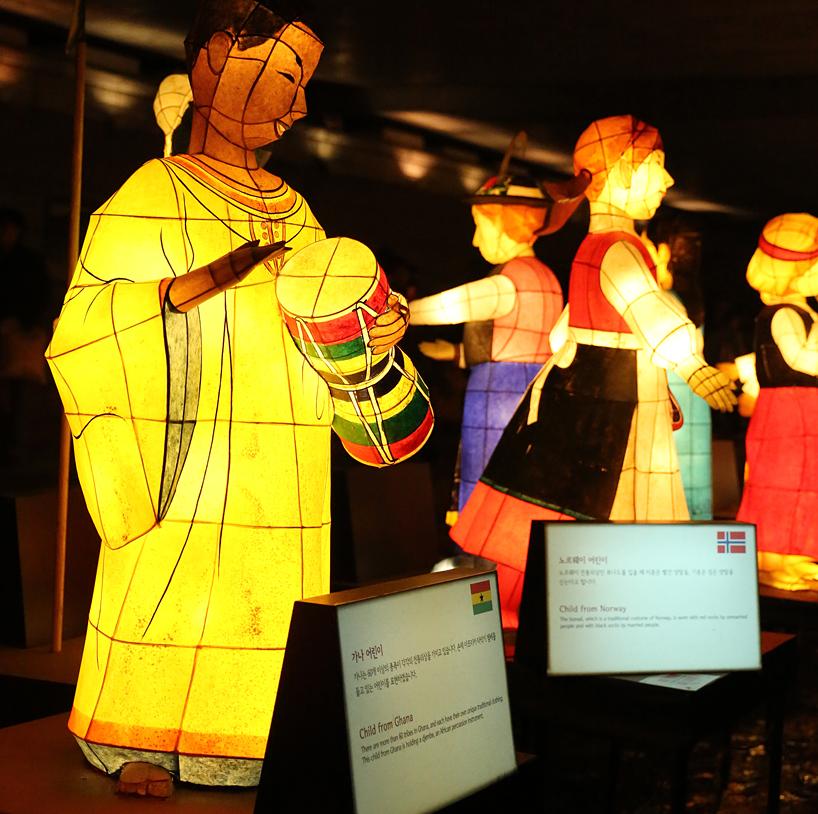
Seoul Lantern Festival 2012

Few weeks ago me (Nahyun) and Rafael went to the 2012 Seoul Lantern Festival and out of  100% coincidence we met Min. That's just destiny!
After appreciating the festival we went to some steak house nearby, it was pretty good and affordable. We will review it some other time.


The Lantern Festival is a traditional event in Seoul that keeps attracting many Koreans and foreigners every year by having a different theme each time.This year the main theme was Joseon Dynasty (Historical Period in Korean History) portraying that era's daily lives, monuments and historical figures.
In the next picture they represent the Seoul City Wall, that's the wall surrounding Hanyang, which used to be the capital during the Joseon Dynasty. Hanyang is now called Seoul!


There were also many inventions like Hanguel (Korean Language), scientific instruments, clocks, drums (at the time used to call for a "trial" on injustice), school and seasonal vestments, traditional weddings and much more. Every lamp was colorful, full of history and culture. We had a good time.


These are Korean Goblin (Do-kkae-bi) faces.


They also showed World Children wearing their countries traditional clothing. However Rafael pointed out that the Brazil one was wrong.
Rafael: "Hey, that's really like the traditional Spanish bullfight outfits... Something must be wrong! haha"
Anyway that was also very cute and fun to watch.

See you next time we visit a new place! ^^


Korean Language

Now we will study Combined Vowels, which are formed by combinations of basic vowels.
Each vowel has its own sound value, but some are hard to differentiate in actual pronunciation.
For example, there is no practical difference in pronunciation between and and between  and.


These are aspirated sound. They are pronounced by emitting an audible rush of air from the lips.


Double consonants are formed by combinations of basic consonants. They are all 'tensed sounds' pronounced with tension in the tongue muscle.


See you next time =)

Korean Language

Hi! Everyone!
The other day, we learned about history of Hangeul, basic Vowels and Consonants.  
You already know the basic Korean Alphabet!!


 ㅏ, ㅓ, ㅗ, ㅜ, ㅡ, ㅣ (Vowels)

 ㅇ, ㄱ, ㄴ, ㄷ, ㄹ      (Consonants)


Just compound these things and you can make syllables.
Let's check some examples:

+  =  아
+  =  가     
------------------   아가  means 'baby'
+  = 가
+ㅜ  = 구
------------------   가구  means 'furniture'
+  = 다
+  = 리
------------------   다리  means 'bridge'

Like this, you can read and write some Korean words.
So, you are ready to study more basic Korean vowels and consonants. Right?


These vowels look so silimar to first lesson vowels.
You can find that these vowels add just one line to ' ㅏ,ㅓ,ㅗ,ㅜ '. 
Read and write vowels for yourself repeatly. Exercising makes perfect! It's up to you!


Don't yawn!
We're gonna study four more consonants this time.
We hope to have helped your Korean studies.

See you next time =)

Introduction!


NaHyun said:

Hi! I'm Nahyun. I'm very excited to start this project. My major is "Teaching Korean as a Foreign Language". I always think about how to make learning korean more enjoyable and fun. So my wish is for you to see that learning korean is not studying a language, but absorbing culture. ^^
I always want to learn more about everything and I hope to do that together with you.
We are finally starting our very humble website, but we will try our best to get better with your support. See you!

Rafael said:

Hey! I'm Rafael from Brazil, I currently live in Seoul (South Korea) as a total foreigner who came here without knowing any korean. I will give advice and help our staff in their everyday work as well as sharing some of my personal experiences and stories... Seoul is a very interesting place to live as a foreigner and, since day 1, I had many funny experiences. I would also like to be useful to people who love Korea like me and want to learn more about this awesome country. Stay tuned on our website and you will be one step closer to korea every day! =P

EunMin said:

Hello, Everyone! Glad to meet you. My name is Eun-Min Park, but you can call me just Min.
My nickname is Meerkat (It means Ferret in English) because people said I'm similar to that animal. It's a cute nickname, ins't it? hehe ^^
I'm Korean and I'm currently studying "Teaching Korean as a Foreign Language" in Seoul.
As one of the "Surviving in Korea" members I would like to share and talk about everything Korea has to offer. 
I really hope I can help you learn more about Korea and its culture! And we will, for sure, be good friends!
Ready? Let's enjoy Korea! =D

Benjamin said:

Bonjour~~ My name is Benjamin and I came from France. I've decided to come to Korea for many reasons, one of these reasons is because I really like the kindness of Korean people. Even though they are shy at first contact, when you get to know them your "Korean Life" takes a totally different way and you enjoy it a lot more. Anyway for those who want to visit Korea (South one, of course!), you will be welcome here!

Sharing!


The Peace Corps was established by John F. Kennedy in 1961. It’s an overseas volunteer program, in which men and women work with people in developing countries to help them improve their living conditions. The main goals of the Peace Corps are to help the poor obtain everyday need and promote world peace. 
The Korea Foundation invited the first group of American Peace Corps volunteers to come back to Korea, so they can visit again and see how their help changed Korea. 
As well as, so they could see old friends that worked together to help Korea in the past. 
The Korea Foundation also wanted to introduce them correctly to the Korean Culture through lectures, cooking classes, art performances, tourism and experiencing every day life in Korea. (http://www.kf.or.kr)

This is the 7th time since 2008 that the Peace Corps was invited to Korea.


That being said, today we joined them for a "Baechu" and "Kkak-ddu-ki" Kimchi cooking class. Our kind teacher lead the class very well along side a translator and a few other cookers, all of us had a great time. Talking to them we could feel how happy they were, and asking about what they think of Korea's reward to them, the answer was unanimous: "Even thou some of us, and our families, helped many countries during the war, Korea was the only one who every tried to share too. I'm really happy to be here, and see how good this country has become."


After talking to the Korea Foundation staff there, we were told that they still want to do a lot more to share with those who helped them before, and there's still a lot more work to be done. Hearing that made us feel very happy to be a part of it, and wish we could do more as well too.


"Kindness in words creates confidence. Kindness in thinking creates profoundness. Kindness in giving creates love." - Lao Tzu


Support Korea Foundation by liking their facebook page: http://www.facebook.com/koreafoundation


Korean Language

The consonants and vowels of Korean are called Hangeul.
It is a writing system invented by King Sejong and several scholars in the year 1443 A.D.
Prior to its invention, Korean didn't have its own writing system and so used Chinese characters, making it difficult for ordinary people to learn to read and write. Hangeul was invented so that it would be easy for everyone to learn.

Hangeul records all the sounds of Korean using 40 consonants and vowels. There are 21 vowels and 19 consonants. The basic 5 consonants were modeled after the shape of the vocal organs. All other consonants were modeled after those 5 consonants using additional strokes. The basic vowels were modeled after Heaven, Earth, and Man.

Hangeul is recognized as one of the most scientific and systematic writing systems in the world. It is a phonetic writing system, and can record any sound.

Hangeul is composed of consonants and vowels.

The vowels consists of 10 basic vowels and 11 combined vowels created by combining the basic vowels for a total of 21 vowels.

These are the first steps to learning how to read Hangeul.


 If you have any question, leave comments.
 We always ready to answer.


Welcome!

Welcome! Our humble home (page) will introduce you to the beautiful Korean culture, interesting Korean language and fun Korean music! If you have an interest in Asia culture or just love to learn a thing or two, stick around and you might have a good time!

Did you eat your kimchi today?

Archive:

About

Copyright. Surviving In Korea. Powered by Blogger.
Copyright © 2013 Surviving in Korea Powered by Blogger Home About Us Portfolio Blog Contact